
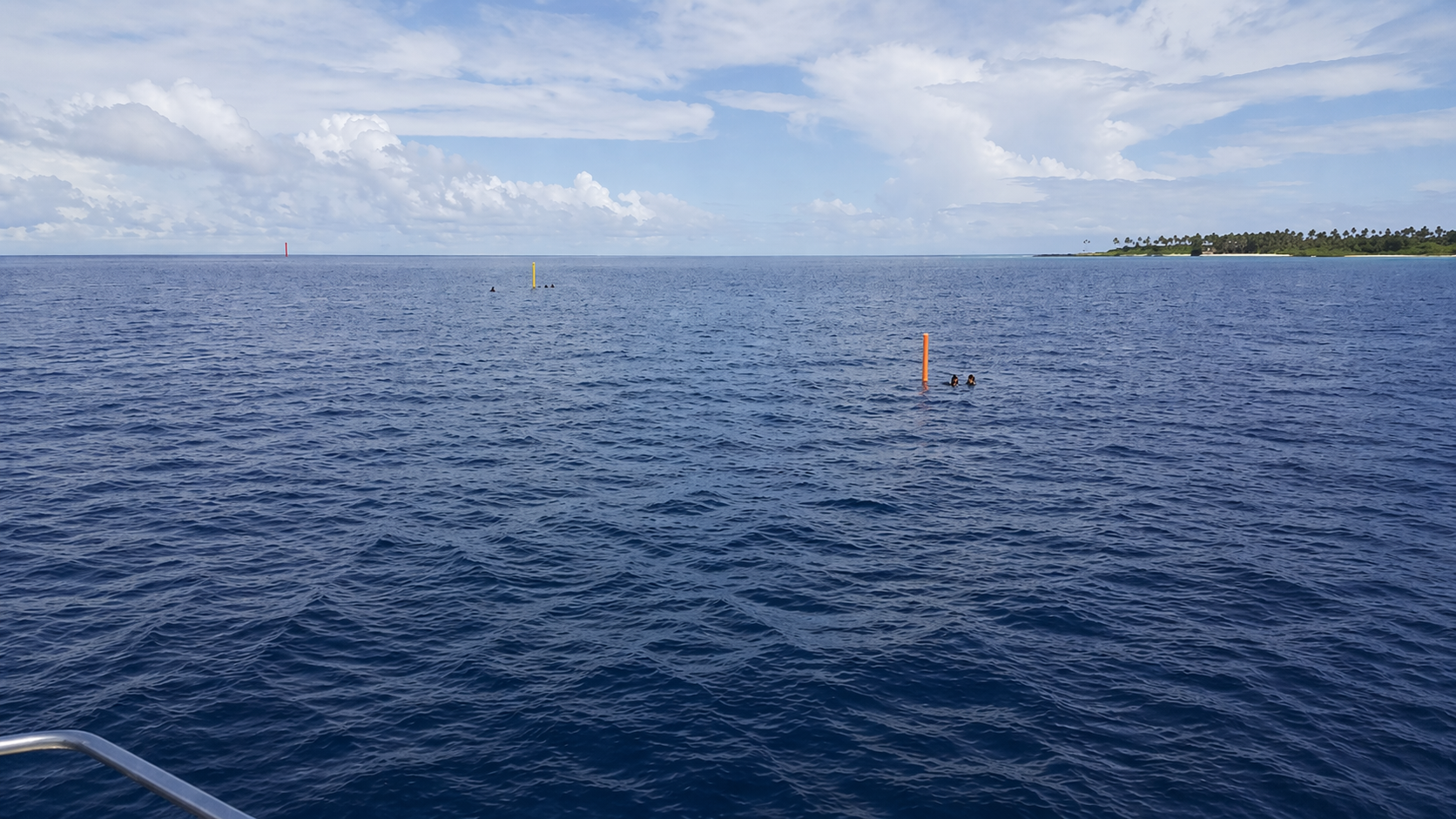
There is a moment every diver should imagine before it ever happens for real. You surface, look around, and the boat is not where you expected. Your buddy is not beside you. The current has done what currents do, quietly and efficiently, and now you are just a head in open water. In calm conditions that can feel inconvenient. In current, swell, chop, or boat traffic, it can become serious very quickly. That is exactly why an SMB is not optional equipment in my book. It is one of the simplest, smartest pieces of safety gear a diver can carry, and one of the easiest to regret not having.
In places like the Philippines or Maldives, this becomes even more obvious. Many of the best dives there involve current, drift, and surfacing well away from the point where you started. You can have a fantastic dive and still end up far from the original location by the time you reach the surface. In those conditions, being visible is not a nice extra. It is part of the plan. A good SMB tells the boat where you are, warns other traffic that divers are below, and gives you a much better chance of being spotted quickly if you surface separated from the group.
What Makes Halcyon SMBs So Good
The Halcyon SMB range shares a few design features that matter in real diving, not just on a product page. All of these marker buoys use a closed-circuit design, which helps them stay inflated on the surface rather than slowly losing gas. They also include an over-pressure valve, so they can be deployed from depth more safely without the risk of over-expansion. Halcyon’s No-Lock connector gives you the option of inflating with a low-pressure hose or orally, which is exactly the kind of flexibility divers appreciate when conditions are less than perfect. Add durable 200 denier nylon and RF-welded seams, and you get an SMB that is built for repeated real-world use, not just occasional practice in flat water.
That combination translates into very practical benefits. A closed-circuit SMB stands taller and stays more reliable once it reaches the surface. An OPV makes deployment cleaner and more controlled. A solid inflation system means fewer awkward fumbles when task loading is already high. Tough materials matter because SMBs get stuffed into pockets, clipped off, dragged out in current, and deployed again and again. This is safety equipment, and safety equipment needs to work every time.
Halcyon 3.3' (1 m) Diver's Alert Marker SMB

Halcyon 3.3' (1 m) Diver's Alert Marker SMB is the smallest model in the lineup, and its main advantage is obvious: it is compact, easy to carry, and easy to stow. It still gives you the closed-circuit design, over-pressure valve, No-Lock inflation system, durable nylon construction, and high-visibility color options. For a diver who wants a very packable marker for routine use, travel, or lower-exposure conditions, it is a neat little tool.
That said, small is small. In protected water or modest surface conditions, a 1 meter SMB can absolutely do the job. But once you move into ocean diving, especially where there is swell, chop, or distance between boat and divers, a small marker can disappear surprisingly easily between waves. I am comfortable with this size as a compact option or a secondary marker, but not as the best choice for every ocean dive.
Halcyon Big Diver's Alert Marker 4.5' (1.4 m)

Halcyon Big Diver's Alert Marker 4.5' (1.4 m) is where many divers will find the sweet spot. It gives you noticeably better height and visibility than the 1 meter model, while still staying compact enough to live comfortably in a pocket. It adds SOLAS reflective tape as well, which is a very worthwhile feature when visibility is marginal, light is flat, or the surface team is searching through glare and swell.
For a lot of recreational divers, this is a very sensible everyday ocean SMB. It is more reassuring in open water than the smaller model, without becoming bulky. If you are diving from boats, surfacing away from the shot line, or doing drift dives where you expect pickup rather than a fixed exit, this size starts to make a lot of sense. It is also a good compromise for divers who know they need a serious marker but still care about keeping their kit clean and streamlined.
Halcyon Super Slim Diver's Alert Marker SMB, 6' (1.8 m)

Halcyon Super Slim Diver's Alert Marker SMB, 6' (1.8 m) is one of the most interesting options in the range because it solves a very common problem. Divers want the visibility of a tall buoy, but they do not always want the bulk of a larger-diameter model. This one gives you the full 1.8 meter height in a narrower, more streamlined profile. You still get the same closed-circuit construction, OPV, No-Lock connector, durable nylon, and compact storage, but in a format that appeals especially to divers who care about minimizing packed volume.
This is a very smart choice for divers who want serious height without carrying an oversized sausage in their pocket. I can see it working particularly well for technical divers, sidemount divers, CCR divers, and anybody traveling to places where current is strong and surfacing well away from the boat is normal. In somewhere like the Maldives or Philippines, where drift can carry you farther than you first expect, a tall but packable SMB is exactly the kind of thing you are happy to have with you on every dive.
Halcyon Super Big Diver's Alert Marker SMB, 6' (1.8 m)

Halcyon Super Big Diver's Alert Marker SMB, 6' (1.8 m) is the heavyweight of the group. It has the same full 1.8 meter height, but with more bulk and a much more commanding presence on the surface. It also brings SOLAS reflective tape and a listed lift capacity of about 23.5 kg, which gives it a very strong upright surface presence. This is the model you look at when you are not trying to be minimal. You are trying to be seen.
And there are dives where that matters a lot. In oceanic conditions with real swell, a smaller SMB can vanish behind wave faces over and over again. A taller, fuller buoy has a much better chance of staying visible to the boat crew and to other traffic. If you are diving offshore, in remote sites, in heavier seas, or anywhere pickup may take longer or visibility from the boat may be compromised, this is the reassuring option. It is also the one I would lean toward for divers who simply want maximum surface signaling confidence and are willing to dedicate a bit more pocket space to get it.
Which Halcyon SMB Is Right for You?
If I were explaining the lineup to a diver in simple terms, I would put it like this. The 3.3' model is the compact minimum. The 4.5' Big SMB is the balanced all-rounder for many ocean divers. The 6' Super Slim is the clever choice if you want full height with less bulk. The 6' Super Big is the maximum-visibility option for more demanding conditions, higher swell, remote pickups, and divers who do not want to compromise on being seen.
Personally, for general ocean diving, I think taller is usually better. That does not mean everybody must carry the biggest model on every dive, but it does mean divers should be honest about where they dive. If your diving includes boat traffic, drift, current, blue water, or the possibility of surfacing separated from the group, then visibility matters more than convenience. A marker buoy that is easy to carry but hard to spot is only doing half the job.
Why Every Diver Needs One
I do not see SMBs as specialist gear anymore. I see them as baseline safety equipment. They are not only for technical divers, instructors, or people doing decompression ascents. They are for any diver who may need to mark position on the surface, signal separation, improve pickup speed, or make their ascent safer in places where boats are operating nearby. If you get swept off a site, if you surface away from the group, or if conditions change while you are underwater, your SMB becomes your voice on the surface.
That is why every diver should own one and know how to use it properly. Not just clip it on and hope for the best. Practice deployment. Practice from depth. Practice in calm water first, then in realistic conditions. Because the dive where you really need your SMB is not the dive where you want to figure it out for the first time.
Learn to Deploy It Properly with a PADI DSMB Course
Owning an SMB is only part of the story. Using it calmly, cleanly, and without turning the deployment into a buoyancy problem is a skill, and it is worth learning properly. A PADI Delayed Surface Marker Buoy Diver course is a great way to build that confidence and make the whole process second nature. If you want to ask about training or book a course at Deep Dive Dubai, use the Deep Dive Dubai booking and enquiry form and the team can help you find the right option.
Share:
Meet the New SUEX VR Series: Nemo, Voyager, and Quantum
Halcyon Symbios Ecosystem: A Smarter, More Connected Way to Dive